Map Notes for BMW N55
- Will Trang
- Brandyn Mowat
- Former user (Deleted)
- Former user (Deleted)

Supported Vehicles:
- USDM 2011 135I
- USDM 2011 335I
- USDM 2011 335xi
| Map | Revision | CARB EO |
|---|---|---|
| Stage0 | v202 | D-660-7 |
| Stage1 | v202 | D-660-7 |
| Stage1+FMIC | v202 | D-660-7 |
Map Availability:
- Download from the COBB Tuning OTS Map Database.
Required Accessport Firmware:
- V2 Accessport: 1.6.8.65-12976 or greater
- V3 Accessport: 1.7.3.0-13001 or greater
Hardware Requirements:
Calibrations can be used on vehicles that maintain stock turbochargers and a stock fuel system. No 3rd party intake system is confirmed to work with these calibrations. Specifics noted below, per map file.
Power Output and Map Requirements
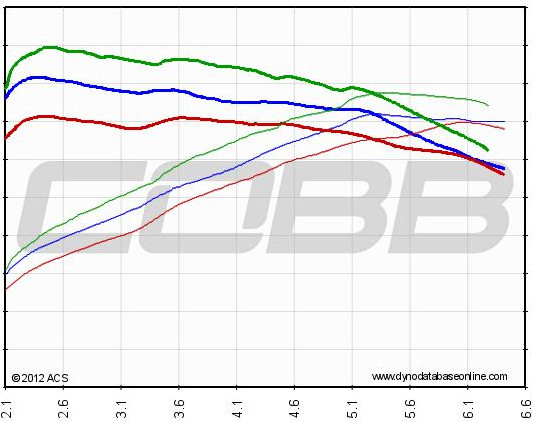
| Stock Stage1 91oct Stage1 93oct |
Peak Gains | Maximum Gains | |
Stage1 91oct | +3% HP / +11% TQ | +10% HP / +14% TQ |
Stage1 93oct | +11% HP / +25% TQ | +18% HP / +26% TQ |
Stage1
Intake Requirements: COBB Panel Filter 7B1110 Covered under CARB EO D-660-7
- Intercooler Requirements: Factory Front Mount Intercooler
Exhaust Requirements: Stock exhaust or upgraded cat-back exhaust
Boost Targets
91 OCT or 95 RON 10psi peak tapering down to 9psi by redline +/- 1.5psi
93 OCT or 98 RON 12.5psi peak tapering down to 11.5psi by redline +/- 1.5psi
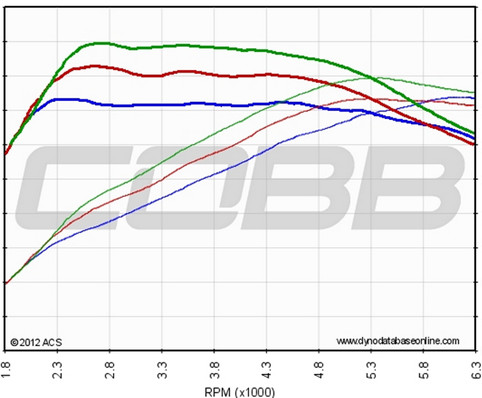
| Stock Stage1 91oct Stage1 93oct |
Peak Gains | Maximum Gains | |
Stage1+ COBB FMIC 91oct | +15% HP / +24% TQ | +17% HP / +25% TQ |
| Stage1+ COBB FMIC 93oct | +17% HP / +33% TQ | +19% HP / +35% TQ |
Stage1+FMIC
Intake Requirements: COBB Panel Filter 7B1110 Covered under CARB EO D-660-7
- Intercooler Requirements: Upgraded COBB Front Mount Intercooler 7B1500 covered under CARB EO D-660-7 Required.
Exhaust Requirements: Stock cat-back exhaust or upgraded cat-back exhaust
Boost Targets
91 OCT or 95 RON 11psi peak tapering down to 9.5psi by redline +/- 1.5psi
93 OCT or 98 RON 12.5psi peak tapering down to 11.5psi by redline +/- 1.5psi
Revision Notes:
v202 – Maps renamed to follow standards for Octane rating
Aggressive renamed to 93 octane/98 RON
Sport renamed to 91 octane/93 RON
v201 – Corrected Fault Logic In Stage2 Maps
Only affects N55 vehicles with 98G1B or 98H1B ROM ID running Stage2 Maps.
v200 – Updated Calibration Logic
Implemented new D.M.E. logic to allow more accurate calculation of load target/requests.
Stage2+: Logic and tuning parameters have been adjusted in order to capitalize on Stage2+ hardware. See hardware requirements for a list of needed upgrades.
v100 – Original Release Calibration
Stage 1: Adjusted boost levels, fuel, ignition, and base programming logic to improve performance and reduce ECU interference over vehicle driver’s input. Torque and load limiters adjusted or altered to allow for significantly increased power over stock levels. Fuel mixtures have been appropriately tuned for increased power levels to provide safety and performance.
Stage 1+ COBB FMIC: Logic and tuning parameters have been adjusted in order to capitalize on Stage1+hardware. “Stage1+ COBB FMIC” mapping requires a COBB front mount intercooler.
Stage2: Mapping Intended for vehicles with COBB downpipes or full TBE. Adjusted boost levels, fuel, ignition timing and base programming logic to improve performance and reduce ECU interference over vehicle driver’s input. Torque and load limiters adjusted or altered to allow for significantly increased power over stock levels. Fuel mixtures have been appropriately tuned for increased power levels to provide safety and performance.
Related content
Copyright 2025 © COBB Tuning Products LLC. All Rights Reserved. | www.cobbtuning.com